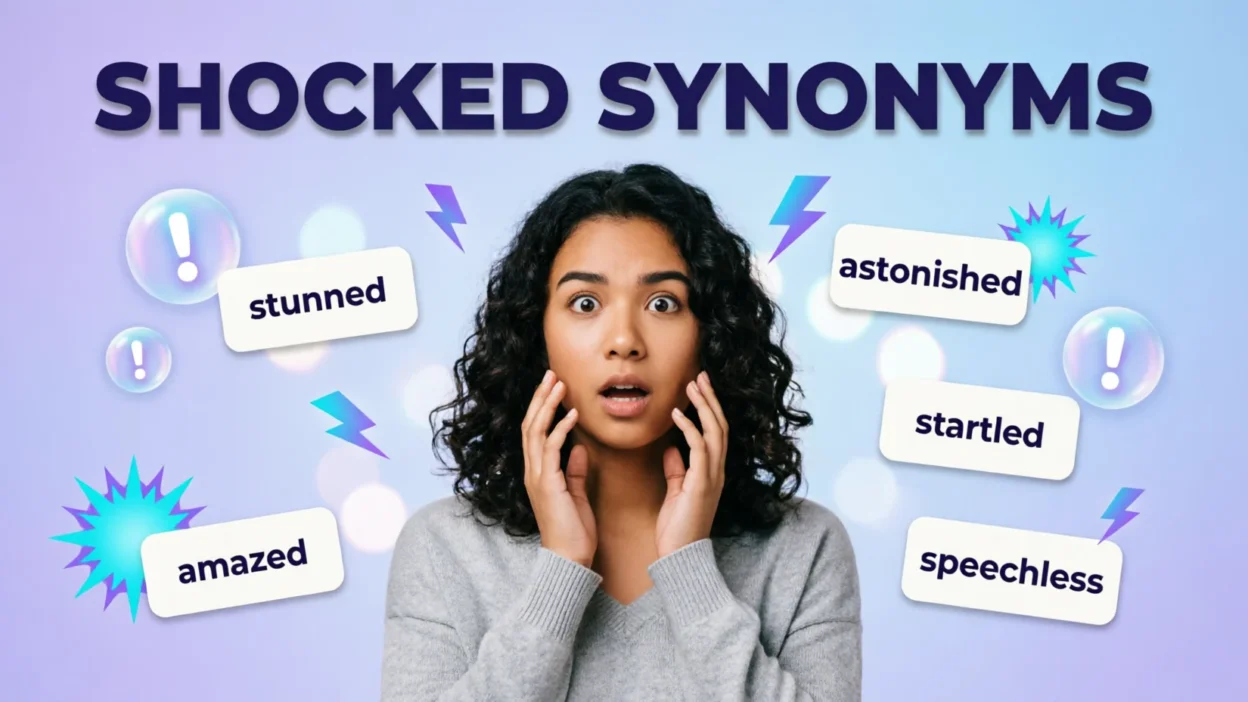
When you need a shocked synonym, the best word depends on how strong the reaction is and what kind of surprise you want to express. Common alternatives include astonished, stunned, amazed, startled, speechless, dumbfounded, and horrified. Some words describe pleasant surprise, while others suggest fear, disbelief, or emotional distress.
If you are writing an essay, telling a story, speaking English, or creating content, choosing the right synonym can make your sentence much more precise.
Quick Answer: What Is a Synonym for “Shocked”?
A shocked synonym is a word or phrase that describes a strong feeling of surprise, disbelief, alarm, or emotional disturbance.
Some useful synonyms are:
- Astonished
- Stunned
- Amazed
- Startled
- Surprised
- Dumbfounded
- Speechless
- Astounded
- Bewildered
- Flabbergasted
- Horrified
- Appalled
- Disbelief
- Taken aback
- Thunderstruck
The right choice depends on whether the situation is surprising, frightening, upsetting, impressive, or difficult to believe.
What Does “Shocked” Mean?
Shocked means feeling a sudden and powerful reaction because something unexpected, disturbing, surprising, or difficult to believe has happened.
For example:
Here, “shocked” tells us that the news produced a strong emotional reaction.
The word can describe different feelings. You might be shocked because something is wonderful, terrible, unexpected, frightening, or unbelievable.
Shocked in Different Contexts
Surprise:
“I was shocked to see her at the party.”
Bad news:
“He was shocked by the accident.”
Disbelief:
“She was shocked that nobody had told her.”
Positive surprise:
“We were shocked by how beautiful the place was.”
Because “shocked” can cover several emotions, a more specific synonym can sometimes make your writing clearer.
30 Synonyms for Shocked
1. Astonished
Simple meaning: Extremely surprised.
Example:
I was astonished by how quickly she finished the project.
Best usage/context: Use “astonished” when something causes a very strong feeling of surprise, especially when the result is impressive or unexpected.
2. Stunned
Simple meaning: So surprised or upset that you temporarily do not know how to react.
Example:
He was stunned when he heard the announcement.
Best usage/context: Excellent for strong emotional reactions to unexpected news or events.
3. Amazed
Simple meaning: Very surprised and impressed.
Example:
We were amazed by her incredible performance.
Best usage/context: Usually works well for positive or impressive surprises.
4. Startled
Simple meaning: Suddenly surprised or frightened.
Example:
I was startled by the loud noise outside.
Best usage/context: Best when something happens suddenly and causes an immediate reaction.
5. Surprised
Simple meaning: Feeling unexpected wonder or uncertainty because something happened that you did not expect.
Example:
She was surprised to receive the award.
Best usage/context: A neutral and everyday alternative to “shocked.”
6. Astounded
Simple meaning: Extremely surprised.
Example:
The scientists were astounded by the results.
Best usage/context: Stronger and more formal than “surprised.”
7. Dumbfounded
Simple meaning: So surprised that you do not know what to say.
Example:
I was dumbfounded when they offered me the position.
Best usage/context: Useful for situations involving extreme surprise and temporary speechlessness.
8. Flabbergasted
Simple meaning: Extremely surprised or confused.
Example:
She was flabbergasted by the unexpected decision.
Best usage/context: Informal and expressive; useful in conversational or humorous writing.
9. Speechless
Simple meaning: Unable to speak because of a powerful emotion.
Example:
The beautiful surprise left him speechless.
Best usage/context: Use when the person’s reaction is so strong that they cannot immediately find words.
10. Bewildered
Simple meaning: Very confused and unsure about what is happening.
Example:
He looked bewildered when everyone suddenly started cheering.
Best usage/context: Best when surprise is mixed with confusion.
11. Taken aback
Simple meaning: Suddenly surprised or slightly shocked.
Example:
I was taken aback by her unexpected question.
Best usage/context: Natural in everyday and professional English when describing an unexpected reaction.
12. Thunderstruck
Simple meaning: Completely overwhelmed by surprise.
Example:
She was thunderstruck when she learned that she had won.
Best usage/context: Dramatic or literary writing; emphasizes an overwhelming reaction.
13. Staggered
Simple meaning: Extremely surprised or shocked by something unexpected.
Example:
He was staggered by the amount of money involved.
Best usage/context: Particularly useful for serious news, figures, or unexpected developments.
14. Gobsmacked
Simple meaning: Extremely surprised.
Example:
I was absolutely gobsmacked when I saw the final result.
Best usage/context: Informal, especially common in British English.
15. Disbelieving
Simple meaning: Unable or unwilling to believe something.
Example:
She gave him a disbelieving look after hearing the explanation.
Best usage/context: Useful when the main reaction is disbelief rather than fear.
16. Incredulous
Simple meaning: Finding something very difficult to believe.
Example:
He was incredulous when he heard the unbelievable claim.
Best usage/context: More formal; appropriate for academic, professional, and serious writing.
17. Horrified
Simple meaning: Extremely shocked, frightened, or upset by something terrible.
Example:
They were horrified by the disturbing scene.
Best usage/context: Use when the shock involves fear, disgust, or deep distress.
18. Appalled
Simple meaning: Extremely shocked and upset by something considered wrong or unacceptable.
Example:
She was appalled by the unfair treatment of the workers.
Best usage/context: Best for morally upsetting, offensive, or unacceptable situations.
19. Alarmed
Simple meaning: Suddenly worried or frightened.
Example:
The residents were alarmed by the sound of the explosion.
Best usage/context: Use when shock creates fear or concern about danger.
20. Dazed
Simple meaning: Confused or unable to think clearly after a sudden event.
Example:
He stood there, dazed by the unexpected news.
Best usage/context: Useful when shock affects someone’s ability to think or respond normally.
21. Overwhelmed
Simple meaning: Strongly affected by an intense emotion or experience.
Example:
She was overwhelmed by the generosity of her friends.
Best usage/context: Can describe positive or negative emotional shock.
22. Amazed
Simple meaning: Filled with great surprise or wonder.
Example:
The audience was amazed by the magician’s performance.
Best usage/context: Best for impressive, remarkable, or wonderful situations.
23. Nonplussed
Simple meaning: So surprised or confused that you do not know how to react.
Example:
He was completely nonplussed by the unexpected response.
Best usage/context: More advanced vocabulary; useful in formal or literary contexts. Note that its meaning can vary by regional usage.
24. Bewitched
Simple meaning: Completely captivated or fascinated.
Example:
The children were bewitched by the colorful performance.
Best usage/context: Not a direct synonym for “shocked,” but useful when the reaction involves fascination or enchantment rather than distress.
25. Shaken
Simple meaning: Emotionally disturbed or upset by something unexpected.
Example:
She was deeply shaken by the accident.
Best usage/context: Strong choice when an upsetting event has a lasting emotional effect.
26. Shell-shocked
Simple meaning: Extremely shocked or emotionally affected by a frightening experience.
Example:
The community was shell-shocked after the sudden disaster.
Best usage/context: Use carefully for severe emotional shock, especially following a traumatic event. In modern writing, “deeply shaken” may be more appropriate in many contexts.
27. Agog
Simple meaning: Extremely eager, excited, or curious because of something unexpected.
Example:
The audience was agog at the spectacular performance.
Best usage/context: Literary or formal writing; it does not normally mean “shocked” in a negative sense.
28. Overcome
Simple meaning: Strongly affected by emotion.
Example:
She was overcome with surprise when her family appeared.
Best usage/context: Useful when a powerful emotion makes a person temporarily unable to respond normally.
29. Flustered
Simple meaning: Nervous, confused, or upset because something unexpected happened.
Example:
He became flustered when everyone suddenly asked him questions.
Best usage/context: Best for mild shock mixed with nervousness or confusion.
30. Electrified
Simple meaning: Filled with sudden excitement and energy.
Example:
The crowd was electrified by the unexpected announcement.
Best usage/context: Best for exciting, energetic situations rather than frightening or upsetting ones.
Shocked Synonyms Comparison Table
| Synonym | Strength | Main feeling | Common context |
|---|---|---|---|
| Surprised | Mild–medium | Surprise | Everyday situations |
| Startled | Medium | Surprise/fear | Sudden events |
| Taken aback | Medium | Surprise | Conversation |
| Amazed | Strong | Wonder | Positive events |
| Astonished | Strong | Surprise | Impressive events |
| Stunned | Very strong | Surprise/upset | Major news |
| Astounded | Very strong | Surprise | Formal writing |
| Dumbfounded | Very strong | Disbelief | Unexpected situations |
| Flabbergasted | Very strong | Surprise/confusion | Informal speech |
| Speechless | Strong | Emotional overwhelm | Powerful moments |
| Bewildered | Medium | Confusion | Unclear situations |
| Horrified | Very strong | Fear/distress | Terrible events |
| Appalled | Very strong | Shock/disapproval | Unacceptable behavior |
| Alarmed | Strong | Fear/worry | Dangerous situations |
| Shaken | Strong | Emotional distress | Upsetting events |
How to Choose the Right Synonym for “Shocked”
Not every synonym for “shocked” has exactly the same meaning. Think about what caused the reaction and what emotion the person experienced.
For Mild Surprise
Choose:
- Surprised
- Taken aback
- Startled
Example:
“I was taken aback by his sudden question.”
These words work well in ordinary conversations.
For Extreme Surprise
Choose:
- Astonished
- Astounded
- Stunned
- Dumbfounded
- Flabbergasted
- Thunderstruck
Example:
“She was astonished by the unexpected result.”
These choices communicate a stronger reaction than simple “surprised.”
For Positive Surprise
Choose:
- Amazed
- Astonished
- Astounded
- Overwhelmed
- Electrified
Example:
“We were amazed by the beauty of the performance.”
These words work well when the unexpected event is impressive or exciting.
For Fear or Danger
Choose:
- Alarmed
- Horrified
- Shaken
- Startled
- Shell-shocked
Example:
“The residents were alarmed by the sudden explosion.”
These words are more appropriate when danger or fear is involved.
For Disbelief
Choose:
- Incredulous
- Dumbfounded
- Disbelieving
- Stunned
- Nonplussed
Example:
“He was incredulous when he heard the accusation.”
These words emphasize difficulty believing what happened.
For Confusion
Choose:
- Bewildered
- Dazed
- Flustered
- Nonplussed
Example:
“She looked bewildered by the unexpected instructions.”
Use these when the person is not simply surprised but also unsure about what is happening.
For Strong Emotional Writing
Choose:
- Thunderstruck
- Staggered
- Dumbfounded
- Speechless
- Shaken
These words can make stories and descriptive writing more vivid.
Common Mistakes When Using “Shocked” Synonyms
Using Every Synonym as an Exact Replacement
Although these words are related, they do not all mean precisely the same thing.
For example:
This sounds unusual because “horrified” normally suggests fear or distress, while “amazed” would usually fit a positive reaction.
Confusing “Startled” With “Astonished”
“Startled” usually describes a sudden reaction, often caused by a noise or unexpected movement.
“Astonished” describes extreme surprise
Using “Appalled” for Positive Surprise
“Appalled” normally communicates strong shock combined with disapproval or distress.
For a positive reaction, “amazed” or “astonished” is usually more appropriate.
Choosing Informal Words in Formal Writing
Words such as flabbergasted and gobsmacked are expressive but informal.
For academic or professional writing, consider:
- Astonished
- Astounded
- Incredulous
- Stunned
Forgetting the Difference Between Surprise and Fear
“Shocked” can describe both surprise and distress, but more precise words help readers understand the exact emotion.
Compare:
Each sentence communicates a different reaction.
FAQs:
What is the strongest synonym for shocked?
Words such as stunned, astounded, dumbfounded, thunderstruck, and flabbergasted can express extremely strong surprise. The best choice depends on whether the reaction involves disbelief, confusion, excitement, or distress.
What is a simple synonym for shocked?
Surprised is the simplest everyday synonym. Other easy alternatives include amazed, startled, and stunned.
What is a synonym for shocked in a positive way?
For positive surprise, use amazed, astonished, astounded, overwhelmed, or electrified depending on the situation.
What is a synonym for shocked by bad news?
Stunned, shaken, horrified, alarmed, and dumbfounded can work depending on the type of bad news and the person’s reaction.
What is a formal synonym for shocked?
Astonished, astounded, incredulous, and staggered can work well in formal contexts. The appropriate word depends on the exact meaning you want to communicate.
What is a synonym for shocked and speechless?
Dumbfounded is especially useful because it describes being so surprised that you do not know what to say. Speechless is another natural choice.
What is the difference between shocked and stunned?
Both describe strong reactions, but stunned often suggests that a person is temporarily unable to react normally because of surprise or emotional impact. “Shocked” is broader and can describe surprise, distress, fear, or disbelief.
Can “surprised” and “shocked” be used interchangeably?
Sometimes, but not always. “Shocked” generally suggests a stronger emotional reaction than “surprised.” For example, you can be surprised by an unexpected gift, while being shocked by tragic or disturbing news.
Conclusion
Choosing the right shocked synonym depends on the emotion behind the reaction. Surprised is a simple everyday choice, while astonished and astounded express stronger surprise. Dumbfounded emphasizes disbelief, startled suggests a sudden reaction, and horrified or appalled communicates distress or strong disapproval.
For clear writing, always consider the exact situation before replacing “shocked.” A precise synonym can show if someone feels surprised, frightened, confused, impressed, disbelieving, or emotionally overwhelmed. This makes your English more natural and expressive.

I’m James Parker, Administrator at SynonymsHive. I oversee content quality, improve user experience, and ensure reliable synonym resources. My passion is making language learning simple, accurate, and accessible for everyone.