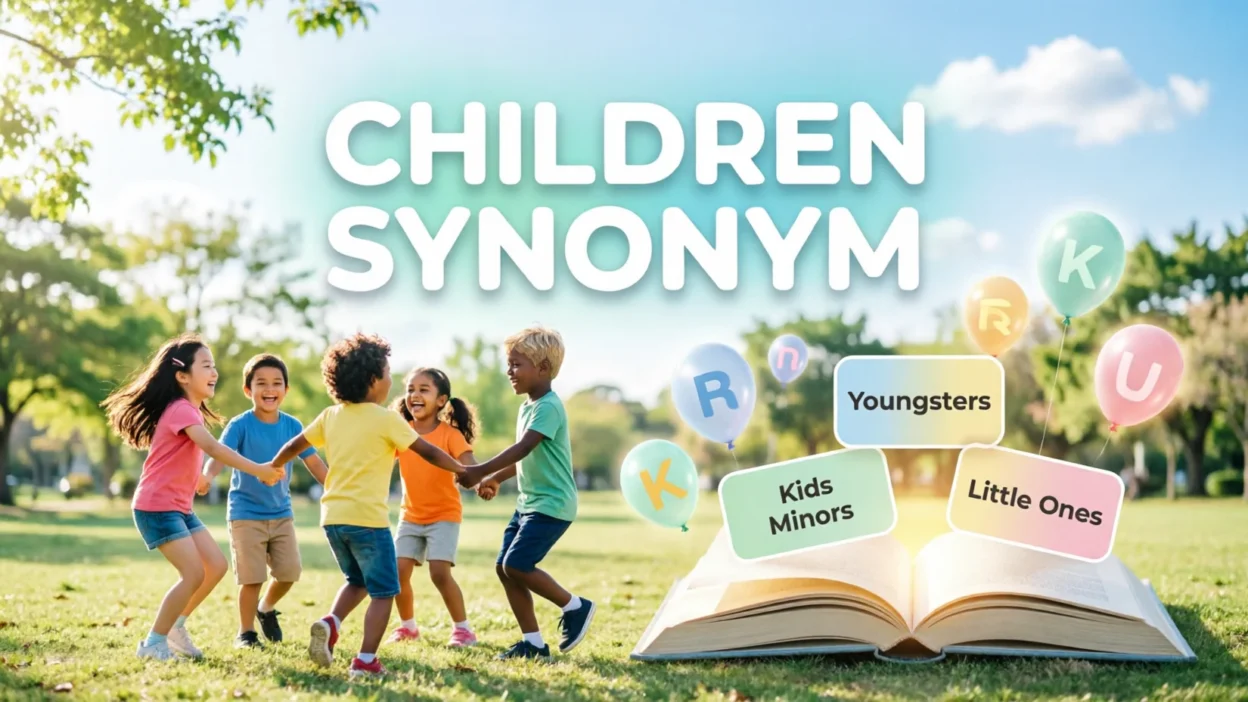
Finding the right synonym for children can make your writing clearer, warmer, and more expressive. Common alternatives include kids, youngsters, young ones, minors, offspring, little ones, and youths. However, each word has a slightly different meaning and tone. Some are suitable for everyday conversations, while others work better in formal writing, legal documents, educational content, or creative stories.
If you are a student, ESL learner, writer, or content creator, understanding these alternatives will help you choose the right word for every situation.
Quick Answer: What Is a Synonym for Children?
A synonym for children is a word or phrase that refers to young people, sons and daughters, or young human beings. The most common alternative is kids, which is informal and widely used in everyday English.
Other useful synonyms include:
- Kids — informal and conversational
- Youngsters — young people in general
- Young ones — affectionate and gentle
- Minors — people below the legal age of adulthood
- Offspring — someone’s children, especially in biological or formal contexts
- Little ones — a warm expression for young children
- Youth — young people considered as a group
- Sons and daughters — children in relation to their parents
The best synonym depends on your audience, writing style, and intended meaning.
What Does Children Mean?
The word children is the plural form of child. It generally refers to young human beings who have not reached adulthood. It can also refer to someone’s sons and daughters, regardless of their age, depending on the context.
For example:
- Young people: The children played together in the park.
- Family relationships: Their children live in different cities.
- Educational settings: The teacher encouraged the children to read.
- Figurative usage: The children of the revolution grew up in a changing society.
The word is neutral and appropriate for most situations, including school assignments, parenting articles, educational materials, and everyday conversations.
30 Synonyms for Children With Meanings and Examples
Below are 30 useful synonyms and related expressions for children, including their meanings, example sentences, and the contexts in which they work best.
1. Kids
Simple meaning: Young people; an informal word for children.
Example sentence: The kids are playing football in the garden.
Best usage/context: Everyday conversations, casual writing, parenting blogs, and friendly messages.
2. Youngsters
Simple meaning: Young people, especially children and teenagers.
Example sentence: The community center offers art classes for youngsters.
Best usage/context: General writing, community activities, news stories, and discussions about young people.
3. Young ones
Simple meaning: A gentle expression for young children or young members of a family.
Example sentence: The parents took their young ones to the beach.
Best usage/context: Warm, affectionate, and informal writing.
4. Little ones
Simple meaning: Young children, especially those who are still small.
Example sentence: The little ones enjoyed listening to bedtime stories.
Best usage/context: Parenting articles, family conversations, children’s books, and affectionate messages.
5. Minors
Simple meaning: People who have not reached the legal age of adulthood.
Example sentence: Minors must follow the venue’s age restrictions.
Best usage/context: Legal, administrative, medical, and official writing. The exact legal age depends on the jurisdiction and context.
6. Offspring
Simple meaning: A person’s children or the young produced by a living organism.
Example sentence: The couple raised their offspring with care and patience.
Best usage/context: Biological, scientific, formal, or slightly impersonal writing.
7. Youths
Simple meaning: Young people, often teenagers or young adults.
Example sentence: Local youths volunteered to clean the neighborhood park.
Best usage/context: Community reports, social issues, public programs, and discussions involving young people. It is not always interchangeable with children.
8. Youth
Simple meaning: Young people considered collectively, or the period of being young.
Example sentence: The program provides educational opportunities for local youth.
Best usage/context: Formal writing, education, public policy, and community development.
9. Juveniles
Simple meaning: Young people who have not reached adulthood, particularly in legal or official contexts.
Example sentence: The report discusses support services for juveniles.
Best usage/context: Legal, criminological, and official writing. The word can sound clinical or negative in some contexts.
10. Little people
Simple meaning: An informal expression sometimes used for young children.
Example sentence: The library organized a storytelling event for little people.
Best usage/context: Informal, playful writing. Use carefully because the expression may be ambiguous or refer to adults with dwarfism.
11. Tots
Simple meaning: Very young children, especially toddlers.
Example sentence: The playground has a separate area for tots.
Best usage/context: Parenting content, childcare, toy descriptions, and informal conversation.
12. Toddlers
Simple meaning: Very young children who are learning to walk.
Example sentence: The daycare offers activities for toddlers.
Best usage/context: Child development, parenting advice, childcare, and early education. This word refers to a specific age and developmental stage, not all children.
13. Babies
Simple meaning: Very young children, usually during the first year or early stages of life.
Example sentence: The hospital provides support for babies and their parents.
Best usage/context: Infant care, parenting articles, and family conversations.
14. Infants
Simple meaning: Babies in the earliest stage of life.
Example sentence: The clinic provides regular health checkups for infants.
Best usage/context: Medical, scientific, childcare, and formal writing.
15. Adolescents
Simple meaning: Young people going through the stage of development between childhood and adulthood.
Example sentence: Adolescents often benefit from supportive educational environments.
Best usage/context: Psychology, education, healthcare, and child development. It usually refers to teenagers rather than young children.
16. Teenagers
Simple meaning: People between the ages of 13 and 19.
Example sentence: Teenagers often enjoy activities that encourage independence and creativity.
Best usage/context: Everyday writing, education, parenting, and discussions about adolescent life.
17. Schoolchildren
Simple meaning: Children who attend school.
Example sentence: Schoolchildren visited the science museum on Friday.
Best usage/context: Education, school reports, classroom activities, and educational articles.
18. Pupils
Simple meaning: Students who are taught by a teacher, especially in schools.
Example sentence: The pupils completed their reading assignments before lunch.
Best usage/context: School-related writing, particularly in British English and other varieties where pupil is common.
19. Students
Simple meaning: People who study at a school, college, university, or another educational institution.
Example sentence: The students participated in a creative writing competition.
Best usage/context: Education and academic writing. It is broader than children because students can be adults.
20. Sons and daughters
Simple meaning: Children in relation to their parents.
Example sentence: The parents encouraged their sons and daughters to follow their dreams.
Best usage/context: Family discussions, speeches, personal writing, and descriptions of parent-child relationships.
21. Descendants
Simple meaning: People who come from a particular ancestor or family line.
Example sentence: The family gathered to celebrate the achievements of their descendants.
Best usage/context: Family history, genealogy, historical writing, and discussions of generations. It does not specifically mean young children.
22. Heirs
Simple meaning: People entitled to inherit property, money, or a position.
Example sentence: The estate was divided among the rightful heirs.
Best usage/context: Legal, financial, historical, and family inheritance discussions. An heir may be an adult, so this is not a direct synonym for children.
23. Progeny
Simple meaning: A person’s or animal’s offspring or descendants.
Example sentence: The author dedicated the book to her progeny.
Best usage/context: Formal, literary, biological, or occasionally humorous writing.
24. Dependents
Simple meaning: People who rely on someone else for financial or practical support.
Example sentence: The application asks applicants to list their dependents.
Best usage/context: Financial, employment, tax, and administrative contexts. Dependents can include adults as well as children.
25. Charges
Simple meaning: People placed under someone’s care or responsibility, especially in certain formal or institutional contexts.
Example sentence: The caregiver made sure all the children in her charge were safe.
Best usage/context: Formal or literary writing. The phrase children in one’s charge is more natural and precise than using charges alone.
26. Little darlings
Simple meaning: An affectionate expression for beloved young children.
Example sentence: The grandparents brought presents for their little darlings.
Best usage/context: Family conversations, affectionate storytelling, and playful writing.
27. Youngsters of the family
Simple meaning: The younger members of a family.
Example sentence: The youngsters of the family performed a song at the celebration.
Best usage/context: Family stories, informal speeches, and descriptive writing.
28. Young generation
Simple meaning: The younger age group within a community or society.
Example sentence: The young generation is finding new ways to communicate.
Best usage/context: Social commentary, cultural discussions, education, and generational comparisons. It usually includes teenagers and young adults as well as children.
29. Youngsters in care
Simple meaning: Young people receiving care or support from an individual or institution.
Example sentence: The organization provides educational resources for youngsters in care.
Best usage/context: Social services, child welfare, and discussions about support programs. This is a context-specific phrase rather than a general synonym.
30. Children of all ages
Simple meaning: A phrase referring to children across different age groups.
Example sentence: The festival offers enjoyable activities for children of all ages.
Best usage/context: Event announcements, educational programs, family activities, and general descriptions. This is a descriptive phrase rather than a single-word synonym.
Comparison Table: Which Synonym for Children Is Best?
The following table compares common alternatives by tone, meaning, and appropriate use.
| Synonym | Tone | Best context |
| Kids | Casual | Everyday conversation |
| Youngsters | Neutral | General writing |
| Little ones | Warm | Parenting and family content |
| Minors | Formal | Legal and official documents |
| Offspring | Formal or scientific | Biology and family relationships |
| Youths | Neutral or formal | Community programs |
| Juveniles | Technical | Legal and official contexts |
| Tots | Playful | Toddler-related content |
| Infants | Clinical or formal | Healthcare and childcare |
| Adolescents | Academic | Psychology and development |
| Teenagers | Neutral | Teen-related topics |
| Schoolchildren | Neutral | Education |
| Pupils | Educational | School settings |
| Students | Broad and neutral | Academic settings |
| Sons and daughters | Personal | Family relationships |
| Descendants | Historical | Ancestry and genealogy |
| Progeny | Formal or literary | Biology and literature |
| Dependents | Administrative | Financial and official documents |
| Little darlings | Affectionate | Family conversations |
| Young generation | Social or analytical | Generational discussions |
Quick recommendation: Use kids for casual conversations, youngsters for general writing, minors for legal contexts, and children when you need the clearest and most universally appropriate word.
How to Choose the Right Synonym for Children
Not every synonym fits every sentence. Consider the tone, intended meaning, and purpose of your writing before choosing an alternative.
1. Choose by Tone
For casual and friendly writing: Use kids, little ones, or tots.
Example: The kids are excited about their school trip.
For neutral and professional writing: Use children, youngsters, or schoolchildren.
Example: The school provides learning resources for children.
For formal or technical writing: Use minors, infants, or adolescents when the specific meaning fits.
Example: The study examines the effects of sleep on adolescents.
For affectionate writing: Use little ones or little darlings.
Example: She prepared a special meal for her little ones.
2. Choose by Meaning
The most accurate synonym depends on the group you want to describe.
- Very young children: Babies, infants, toddlers, tots
- School-age children: Schoolchildren, pupils
- Teenagers: Adolescents, teenagers
- People below legal adulthood: Minors
- Children in a family: Sons and daughters, offspring
- Young people collectively: Youth, youths, youngsters
- People descended from an ancestor: Descendants, progeny
These categories overlap, but the words are not identical. For example, infants refers to babies, while adolescents refers to a later stage of development.
3. Choose by Writing Intent
For school assignments: Choose children, pupils, or schoolchildren according to the sentence.
For parenting blogs: Use kids, little ones, or toddlers when appropriate.
For legal writing: Use minors if the legal meaning is intended.
For scientific articles: Choose infants, adolescents, or offspring based on the subject.
For creative writing: Use youngsters, little ones, or little darlings to create a particular mood.
For family history: Choose descendants or progeny when discussing generations rather than young age.
Common Mistakes When Using Synonyms for Children
Even familiar words can become confusing when used in the wrong context. Avoid these common mistakes.
1. Using Kids in Every Type of Writing
Kids is natural in conversation, but it may sound too informal in certain academic, legal, or official documents.
Instead of: The regulation applies to kids under the specified age.
Consider: The regulation applies to minors under the specified age.
Use the alternative that matches the intended legal meaning.
2. Treating Minors and Children as Identical
Minors refers to people below the applicable legal age of adulthood. Children may refer to young people generally or to someone’s sons and daughters.
For example, an adult may still refer to her adult sons and daughters as her children.
3. Confusing Toddlers With All Children
Toddlers are a specific group of very young children who are learning to walk. The term is not suitable for teenagers or school-age children.
Incorrect: The toddlers prepared for their high school examination.
Better: The students prepared for their high school examination.
4. Using Offspring in Warm, Everyday Conversation
Offspring is grammatically correct, but it can sound impersonal when talking affectionately about one’s family.
Instead of: We took our offspring to the park.
More natural: We took our children to the park.
5. Using Youths for Very Young Children
Youths usually suggests older children, teenagers, or young adults. If you are describing preschoolers, young children or little ones is generally clearer.
6. Assuming Descendants Means Young People
Descendants refers to people who come from an ancestor, not necessarily people who are young.
For example, someone’s descendants may include children, grandchildren, and adult generations far into the future.
FAQs:
1. What is the most common synonym for children?
The most common informal synonym is kids. For neutral writing, youngsters may work, although children is often the clearest choice.
2. What is a formal word for children?
Minors, offspring, and juveniles can be formal alternatives, depending on the meaning. Minors is appropriate for legal age distinctions, while offspring is often used in biological or formal family contexts.
3. What is another word for little children?
You can use little ones, toddlers, tots, or young children. Choose toddlers only when referring to children at that particular developmental stage.
4. What is a synonym for children in academic writing?
Children itself is suitable for academic writing. Depending on the research subject, infants, schoolchildren, adolescents, or young people may be more precise.
5. Are kids and children the same?
Yes, they often refer to the same group of young people. However, kids is more informal, whereas children is neutral and suitable for both casual and formal writing.
6. What is a synonym for children in a family context?
Kids, sons and daughters, young ones, and offspring can refer to children within a family. Sons and daughters emphasizes the parent-child relationship, while young ones sounds more affectionate.
7. Can adults be called someone’s children?
Yes. The word children can refer to someone’s sons and daughters regardless of their age. For example, a parent may say, “My children are all grown up.”
8. How can I avoid repeating the word children?
Use alternatives such as kids, youngsters, schoolchildren, or young people when they accurately match the context. You can also restructure sentences to avoid repetition. Do not replace the word simply for variety if the alternative changes the meaning.
Conclusion
Choosing the right synonym for children helps make your writing more natural, precise, and engaging. Words such as kids, youngsters, little ones, and young people work well in everyday and general writing, while minors, infants, and adolescents are useful when a more specific meaning is needed.
Remember that not all 30 alternatives are exact synonyms. Some describe a particular age group, family relationship, legal status, or social context. For the clearest general meaning, children remains the best all-purpose choice. When you need a different tone or a more precise description, choose the alternative that fits your sentence and audience.
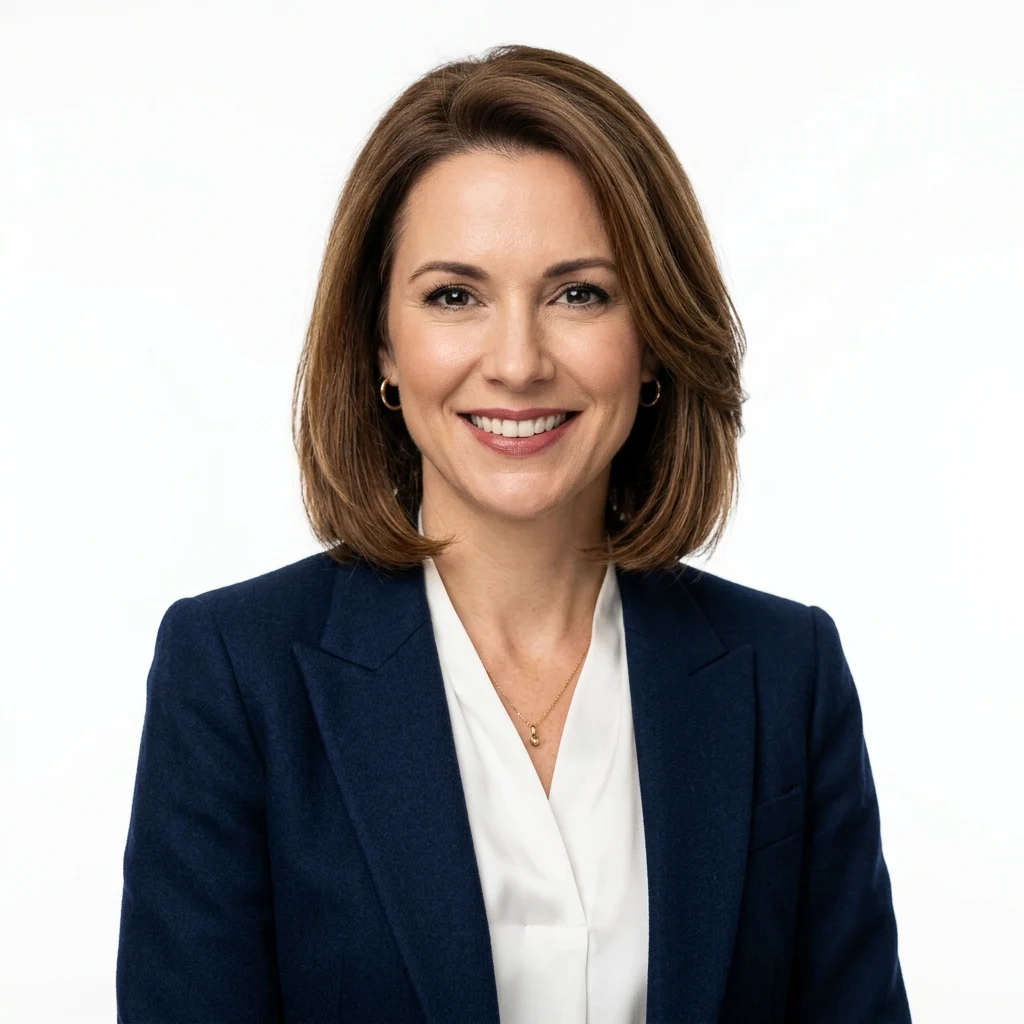
I am Olivia Brooks, a language enthusiast and writer at SynonymsHive. I enjoy creating clear, engaging content about synonyms, vocabulary, and word meanings, helping readers improve their writing and communicate with confidence every day.