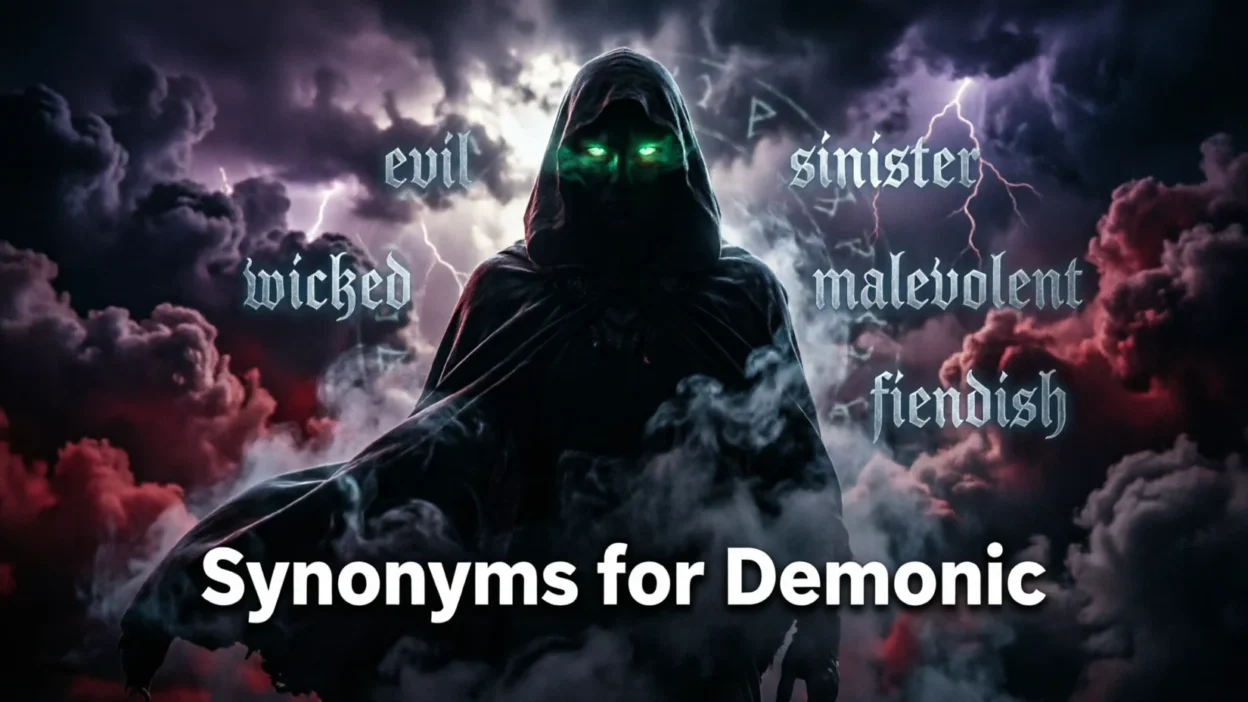
When you need synonyms for demonic, the best word depends on what you mean: supernatural evil, extreme cruelty, frightening behavior, or something dark and sinister. Common alternatives include devilish, diabolical, fiendish, infernal, evil, malevolent, sinister, wicked, hellish, and satanic. Each carries a slightly different tone, so choosing the right synonym can make your writing clearer and more expressive.
Quick Answer: Synonyms for Demonic
Some of the most useful synonyms for demonic are:
Devilish, diabolical, fiendish, infernal, satanic, hellish, evil, wicked, malevolent, sinister, malicious, vile, monstrous, cruel, vicious, untamed, depraved, corrupt, nefarious, inhuman, dark, threatening, menacing, terrifying, eerie, sinister, malevolent, fiend-like, possessed, unholy, and accursed.
The closest synonym depends on context. For a supernatural meaning, diabolical, satanic, infernal, or fiendish may work best. For someone’s cruel behavior, vicious, malicious, depraved, or monstrous may be more natural.
What Does Demonic Mean?
Demonic is an adjective used to describe something associated with a demon or that seems extremely evil, frightening, cruel, or supernatural.
For example:
The story describes a demonic creature hiding in the forest.
Here, demonic refers to something supernatural and evil.
The word can also be used figuratively:
His demonic laughter frightened everyone in the room.
In this sentence, the person is not necessarily a literal demon. The word describes laughter that sounds frightening, unnatural, or extremely sinister.
Demonic Meaning in Simple English
Demonic means extremely evil, frightening, wicked, or connected with demons.
Depending on the sentence, it can describe:
- A supernatural creature
- A frightening appearance
- Evil behavior
- Cruel actions
- A sinister personality
- Something associated with hell or demons
- An extremely disturbing atmosphere
30 Synonyms for Demonic
1. Devilish
Simple meaning: Evil, mischievous, or resembling a devil.
Example:
He gave a devilish grin before playing the prank.
Best usage/context:
Use devilish for mischievous behavior or something playfully wicked. It can be much less serious than demonic.
2. Diabolical
Simple meaning: Extremely evil or cruel.
Example:
The villain created a diabolical plan to destroy the village.
Best usage/context:
Use diabolical for extremely wicked plans, actions, or behavior.
3. Fiendish
Simple meaning: Extremely cruel, wicked, or evil.
Example:
The criminal was known for his fiendish cruelty.
Best usage/context:
Good for describing cruel people, actions, plans, or behavior.
4. Infernal
Simple meaning: Related to hell or extremely unpleasant.
Example:
The villain escaped from an infernal realm.
Best usage/context:
Best for literary, fantasy, religious, or dramatic writing.
5. Satanic
Simple meaning: Related to Satan or associated with extreme evil.
Example:
The novel features a mysterious satanic ritual.
Best usage/context:
Use when the context specifically involves Satan, satanism, or a strongly religious idea of evil.
6. Hellish
Simple meaning: Like hell; extremely unpleasant, frightening, or terrible.
Example:
The travelers endured a hellish journey through the desert.
Best usage/context:
Useful both literally in fantasy writing and figuratively for extremely difficult situations.
7. Evil
Simple meaning: Morally very bad or wicked.
Example:
The story centers on an evil ruler who wants absolute power.
Best usage/context:
The broadest and simplest alternative. It works in everyday and literary writing.
8. Wicked
Simple meaning: Morally bad, cruel, or evil.
Example:
The wicked sorcerer cursed the kingdom.
Best usage/context:
Useful in stories, fairy tales, fantasy, and descriptions of morally bad behavior.
9. Malevolent
Simple meaning: Having a desire to harm others.
Example:
A malevolent force seemed to control the abandoned house.
Best usage/context:
Excellent when emphasizing harmful intentions rather than supernatural identity.
10. Sinister
Simple meaning: Suggesting that something bad or dangerous may happen.
Example:
A sinister figure stood silently at the end of the hallway.
Best usage/context:
Use for people, expressions, places, sounds, situations, or events that create a threatening feeling.
11. Malicious
Simple meaning: Intending to hurt or harm someone.
Example:
The character made a malicious attempt to ruin her reputation.
Best usage/context:
Best for harmful intentions, words, actions, or behavior.
12. Vile
Simple meaning: Extremely unpleasant, bad, or morally disgusting.
Example:
The novel portrays the villain as a vile and selfish man.
Best usage/context:
Useful when emphasizing disgust or moral condemnation.
13. Monstrous
Simple meaning: Extremely cruel, horrible, or resembling a monster.
Example:
The king committed a monstrous act against his own people.
Best usage/context:
Good for extreme cruelty or frightening physical descriptions.
14. Cruel
Simple meaning: Causing pain or suffering deliberately.
Example:
The cruel ruler punished anyone who disagreed with him.
Best usage/context:
A straightforward choice when the focus is on causing suffering rather than supernatural evil.
15. Vicious
Simple meaning: Violent, aggressive, or deliberately harmful.
Example:
The creature gave a vicious growl.
Best usage/context:
Especially useful for aggressive people, animals, attacks, or behavior.
16. Untamed
Simple meaning: Extremely violent, brutal, or uncontrolled.
Example:
The monster launched a untamed attack on the travelers.
Best usage/context:
Best when describing extreme violence or brutality.
17. Depraved
Simple meaning: Morally corrupt and extremely bad.
Example:
The detective uncovered a depraved criminal scheme.
Best usage/context:
Use when someone’s morality or behavior is seriously corrupt.
18. Corrupt
Simple meaning: Morally dishonest or damaged.
Example:
The corrupt leader used fear to control the population.
Best usage/context:
Useful for people, institutions, systems, or societies rather than supernatural creatures.
19. Nefarious
Simple meaning: Extremely wicked or evil.
Example:
The group was involved in a nefarious plot.
Best usage/context:
A strong literary word for evil plans, activities, or intentions.
20. Inhuman
Simple meaning: Extremely cruel or lacking normal human compassion.
Example:
The prisoners were subjected to inhuman treatment.
Best usage/context:
Use when emphasizing extreme cruelty or a lack of compassion.
21. Dark
Simple meaning: Connected with evil, frightening ideas, or unpleasant subjects.
Example:
The writer created a dark and disturbing character.
Best usage/context:
A flexible and less extreme alternative to demonic.
22. Threatening
Simple meaning: Showing that harm or danger may occur.
Example:
The creature made a threatening sound from behind the door.
Best usage/context:
Best when the main idea is danger rather than evil.
23. Menacing
Simple meaning: Making someone feel that danger is near.
Example:
A menacing shadow moved across the wall.
Best usage/context:
Excellent for descriptions of people, movements, expressions, sounds, or environments.
24. Terrifying
Simple meaning: Causing extreme fear.
Example:
The film introduced a terrifying creature from another world.
Best usage/context:
Use when the main emphasis is fear rather than wickedness.
25. Eerie
Simple meaning: Strange, mysterious, and frightening.
Example:
An eerie voice echoed through the empty building.
Best usage/context:
Ideal for spooky settings, sounds, places, and atmospheres.
26. Fiend-like
Simple meaning: Resembling a fiend or extremely evil creature.
Example:
The villain had a fiend-like appearance.
Best usage/context:
Particularly useful in descriptive and fictional writing.
27. Possessed
Simple meaning: Controlled by a supernatural spirit or demon.
Example:
The horror story follows a possessed child.
Best usage/context:
Use when describing someone believed to be controlled by a supernatural entity.
28. Unholy
Simple meaning: Opposed to what is considered sacred or holy.
Example:
The characters discovered an unholy ritual beneath the castle.
Best usage/context:
Best in religious, supernatural, fantasy, and horror contexts.
29. Accursed
Simple meaning: Under a curse or deserving condemnation.
Example:
The villagers avoided the accursed forest.
Best usage/context:
A dramatic, old-fashioned, or literary choice for cursed or condemned things.
30. Demonic-Looking
Simple meaning: Having an appearance that resembles a demon.
Example:
The creature had a demonic-looking face and glowing eyes.
Best usage/context:
Useful when you specifically want to describe appearance rather than personality or morality.
Comparison Table: Demonic Synonyms
| Synonym | Main Meaning | Tone | Best Context |
| Devilish | Wicked or mischievous | Mild–strong | Behavior, expressions |
| Diabolical | Extremely evil | Strong | Plans, actions |
| Fiendish | Cruel and wicked | Strong | People, behavior |
| Infernal | Related to hell | Dramatic | Fantasy, literature |
| Satanic | Related to Satan | Religious | Supernatural contexts |
| Hellish | Like hell or terrible | Strong | Experiences, settings |
| Evil | Morally bad | Direct | General use |
| Wicked | Bad or morally wrong | Moderate | Stories, behavior |
| Malevolent | Intending harm | Strong | Forces, intentions |
| Sinister | Threatening or ominous | Moderate–strong | People, places, moods |
| Malicious | Intending harm | Moderate | Actions, intentions |
| Vile | Morally disgusting | Strong | People, actions |
| Monstrous | Horribly cruel | Strong | Actions, creatures |
| Cruel | Causing suffering | Direct | Behavior |
| Vicious | Violent or aggressive | Strong | Attacks, behavior |
| Untamed | Brutally violent | Strong | Violence |
| Depraved | Morally corrupt | Strong | People, actions |
| Corrupt | Morally dishonest | Moderate | People, systems |
| Nefarious | Wicked or criminal | Strong | Plans, activities |
| Inhuman | Lacking compassion | Strong | Treatment, behavior |
| Dark | Evil or disturbing | Mild–strong | Themes, characters |
| Threatening | Suggesting danger | Moderate | Situations, behavior |
| Menacing | Creating fear of danger | Strong | People, figures |
| Terrifying | Causing great fear | Strong | Creatures, situations |
| Eerie | Strange and frightening | Mild–moderate | Atmosphere |
| Fiend-like | Resembling a fiend | Strong | Appearance |
| Possessed | Controlled by a spirit | Supernatural | Horror |
| Unholy | Not sacred | Strong | Religious/fantasy |
| Accursed | Cursed or condemned | Literary | Fantasy, fiction |
| Demonic-looking | Resembling a demon | Descriptive | Appearance |
How to Choose the Right Synonym for Demonic
The best synonym depends on what aspect of “demonic” you want to emphasize.
For Supernatural Evil
Choose:
- Satanic
- Infernal
- Unholy
- Possessed
- Fiendish
- Diabolical
These words work well in horror, fantasy, religious, and supernatural contexts.
Example:
“The ancient temple contained an unholy symbol.”
For Extreme Cruelty
Choose:
- Vicious
- Untamed
- Monstrous
- Depraved
- Inhuman
- Fiendish
These emphasize brutal or cruel behavior.
Example:
“The villain committed a monstrous act.”
For Evil Intentions
Choose:
- Malevolent
- Malicious
- Nefarious
- Diabolical
- Wicked
These are especially useful when describing someone’s plans or intentions.
Example:
“The villain had a nefarious plan.”
For a Frightening Atmosphere
Choose:
- Sinister
- Menacing
- Eerie
- Dark
- Threatening
- Terrifying
These words focus more on the feeling something creates.
Example:
“A sinister silence filled the room.”
For Simple Everyday English
Choose:
- Evil
- Cruel
- Wicked
- Dark
- Threatening
These are generally easier for ESL learners and general readers to understand.
Demonic vs. Devilish
Demonic usually sounds more serious and supernatural, while devilish can describe something mischievous or playful.
- Demonic: The creature had a demonic appearance.
- Devilish: The child gave a devilish smile.
Calling a child’s prank “devilish” can sound playful. Calling it “demonic” makes it sound much darker.
Demonic vs. Sinister
These words overlap, but they are not identical.
Demonic suggests demons, supernatural evil, or extremely disturbing behavior.
Sinister suggests that something feels threatening, suspicious, or dangerous.
- A demonic creature suggests supernatural evil.
- A sinister stranger suggests someone who appears dangerous.
Demonic vs. Malevolent
Malevolent specifically emphasizes a desire to cause harm.
For example:
A malevolent spirit followed the travelers.
The spirit is not merely frightening. It appears to have harmful intentions.
Demonic vs. Evil
Evil is much broader.
Something can be evil without being supernatural.
For example:
The dictator was evil.
But:
The creature had a demonic appearance.
The second sentence strongly suggests something supernatural or demon-like.
Common Mistakes When Using Demonic Synonyms
Using “Demonic” When You Only Mean “Scary”
Not everything frightening is demonic.
❌ The thunderstorm was demonic.
This can work in creative writing, but it is unusual in ordinary descriptions.
A more natural choice might be:
The thunderstorm was terrifying.
Using “Satanic” as a General Synonym for Every Evil Thing
Satanic has a specific association with Satan or satanism. It should not automatically replace every use of demonic.
Confusing “Sinister” With “Cruel”
A sinister person may simply appear threatening or suspicious. They do not necessarily have to be cruel.
Using “Eerie” for Extreme Evil
Eerie usually means strange and frightening. It is considerably milder than diabolical or depraved.
Choosing a Very Strong Word for a Mild Situation
Words such as diabolical, depraved, monstrous, and satanic are powerful. Using them for ordinary misbehavior can make your writing sound exaggerated.
FAQs:
What is the closest synonym for demonic?
Diabolical, fiendish, devilish, infernal, and satanic are among the closest synonyms when demonic means extremely evil or associated with demons.
What is another word for demonic behavior?
Depending on the meaning, you can use evil, wicked, vicious, malicious, depraved, cruel, diabolical, or fiendish.
What is a synonym for demonic in a scary context?
Sinister, menacing, terrifying, eerie, hellish, and threatening can work when the focus is on fear or danger.
What is a stronger word than demonic?
Words such as diabolical, fiendish, depraved, monstrous, and malevolent can sound stronger in particular contexts, although there is no single synonym that is always more intense.
Is “devilish” the same as “demonic”?
Not exactly. Devilish can mean wicked or mischievous and may even sound playful. Demonic usually carries a darker and more supernatural meaning.
What is a synonym for demonic in literature?
Literary alternatives include infernal, fiendish, diabolical, unholy, accursed, satanic, and hellish.
What is the opposite of demonic?
Possible opposites include angelic, holy, benevolent, kind, virtuous, pure, and heavenly, depending on the context.
Can demonic be used figuratively?
Yes. Writers often use demonic figuratively to describe something extremely frightening, cruel, intense, or disturbing without literally suggesting that a demon is involved.
Conclusion
The best synonyms for demonic depend on the exact meaning you want to express. If you mean supernatural evil, satanic, infernal, unholy, and fiendish are strong choices. If you mean cruelty, consider vicious, monstrous, depraved, or inhuman. For a threatening atmosphere, sinister, menacing, eerie, and dark may sound more natural.
Choosing the right synonym helps your writing communicate not only the idea of evil but also its tone, intensity, intention, and context. If you are writing a horror story, describing a villain, analyzing literature, or simply improving your vocabulary, these alternatives give you more precise ways to express the meaning of demonic.

I am Olivia Brooks, a language enthusiast and writer at SynonymsHive. I enjoy creating clear, engaging content about synonyms, vocabulary, and word meanings, helping readers improve their writing and communicate with confidence every day.